
Orthopedic Design Revisited: Le Corbusier and L’Esprit nouveau, 1920-1925
Barra lateral del artículo
Contenido principal del artículo
Resumen
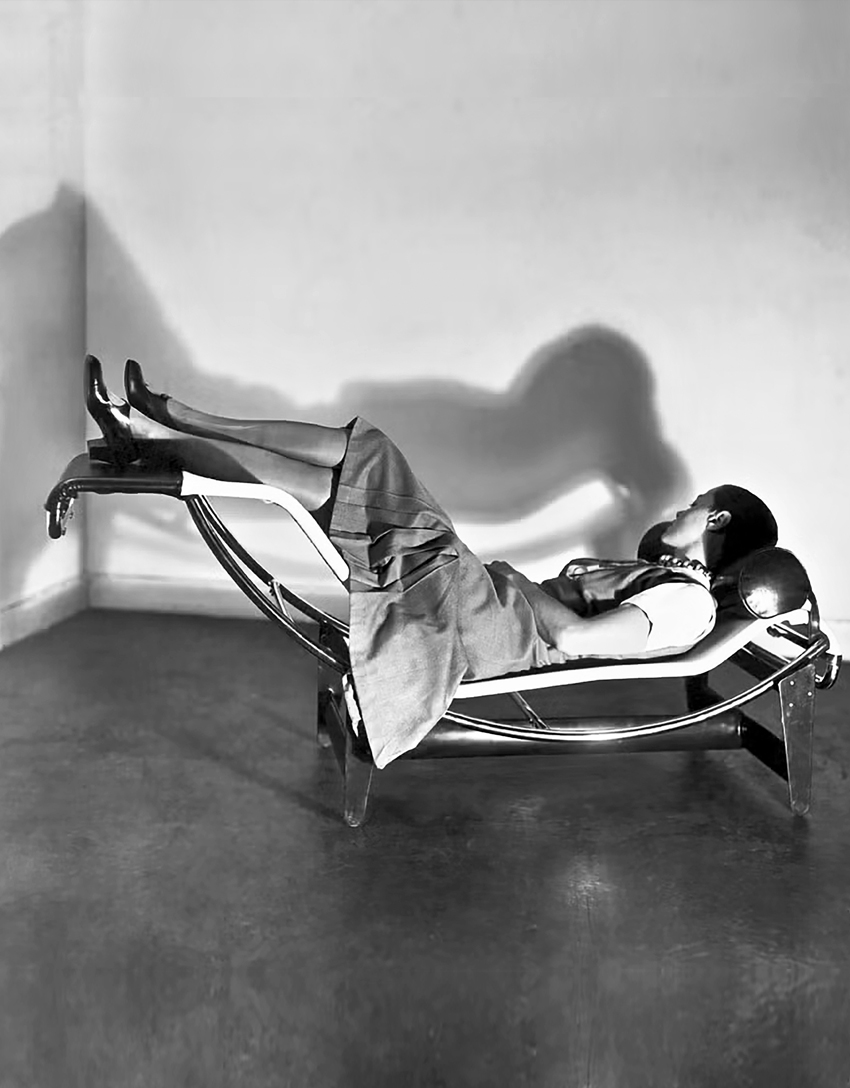
In this article, Le Corbusier’s orthopedic design principles are revisited as a way of presenting a more generalized set of preoccupations with energy hygiene. By examining how specific design objects reflect the emerging concerns of modern psychology, it will be demonstrated how Le Corbusier saw the decorative arts as a means of managing the energetic aspect of human experience—preventing crises and alleviating the psychological overload that defines a newly urbanized and cosmopolitan set of experiences. In framing design within the broader context of energy hygiene, this paper aims to position Le Corbusier as a comprehensive designer who responded to the medical and techno-scientific demands of modern life.
Descargas
Detalles del artículo

Esta obra está bajo licencia internacional Creative Commons Reconocimiento-NoComercial-SinObrasDerivadas 4.0.
Los autores/as que publiquen en esta revista aceptan las siguientes condiciones:
• Los autores/as conservan los derechos de autor y ceden a la revista el derecho de la primera publicación, con el trabajo registrado con la licencia de atribución de Creative Commons, que permite a terceros utilizar lo publicado siempre que mencionen la autoría del trabajo y la publicación en esta revista.
• Los autores/as pueden realizar otros acuerdos contractuales independientes y adicionales para la distribución no exclusiva de la versión preprint (versión enviada al editor) del artículo publicado en esta revista (p. ej., incluirlo en un repositorio institucional o publicarlo en un libro) siempre que indiquen claramente que el trabajo se publicó por primera vez en ella. Se permite y recomienda a los autores/as difundir su obra a través de Internet (p. ej.: en archivos telemáticos institucionales o en su página web) después de la publicación en Además de, lo cual puede producir intercambios interesantes y aumentar las citas de la obra publicada. (Véase El efecto del acceso abierto).
Citas
ARMSTRONG, T., Modernism, Technology and the Body: A Cultural Study, Cambridge, University Press, 1998.
BANHAM, R., Theory and Design in the First Machine Age, London, Architectural Press, 1960.
BENJAMIN, W., “On Some Motifs in Baudelaire”, in Selected Writings: 1938-1940, Translated by Rodney Livingstone, Cambridge, MA, Harvard University Press, 1996, p. 318.
BENJAMIN, W., “The Destructive Character”, in Selected Writings: 1931-1934, Translated by Edmund Jephcott, Cambridge, MA, Harvard University Press, 1999, pp. 541-542.
BENTON, C., “Le Corbusier: Furniture and the Interior”, Journal of Design History 3, no. 23, 1990, pp. 103–124.
BENTON, T., “Dreams of Machines: Futurism and l’Esprit Nouveau”, Journal of Design History 3, no. 1, 1990, pp. 19–34.
BENTON, T., LC Foto: Le Corbusier: Secret Photographer, Zürich, Lars Müller, 2013.
BRESSANI, M., “Prosthetic Fantasies of the First Machine Age: Viollet-le-Duc’s Iron Architecture”, AA files, no. 68, 2014, pp. 43-49.
BRESSANI, M., “Viollet-le-Duc’s Organic Machine”, in Architecture/Machine, in GLEICH, M. and STALDER, L. (eds.), Gta Papers, Zurich, Switzerland, Gta Verlag, 2017, pp. 43-49.
CAMPBELL, M., “From Cure Chair to Chaise Longue: Medical Treatment and the Form of the Modern Recliner”, Journal of Design History 12, no. 4, 1999, pp. 327–343.
CAMPBELL, M., “What Tuberculosis Did for Modernism: The Influence of a Curative Environment on Modernist Design and Architecture,” Medical History 49, no. 4, 2005, pp. 463–488.
CARROY, J., “The Post-Revolutionary Self: Politics and Psyche in France, 1750-1850”, French Studies 61, no. 4, 2007, pp. 519–520.
CARROY, J, OHAYON, A. et PLAS, R., “La psychologie au Collège de France”, Revue philosophique de la France et de l’étranger 140, no. 2, 2015, pp. 225-228.
CARROY, J., y PLAS, R., “How Pierre Janet Used Pathological Psychology to Save the Philosophical Self”, Journal of the History of the Behavioral Sciences 36, no. 3, 2000, pp. 231–240.
COHEN, J. L., “Le Corbusier’s Modulor and the Debate on Proportion in France”, Architectural Histories 2, no. 1, 2014.
COLOMINA, B., “L’Esprit nouveau: Architecture and Publicity,” in COLOMINA, B. and OCKMAN, J. (eds.), Architectureproduction, New York, Princeton Architectural Press, 1988.
COLOMINA, B., Privacy and Publicity: Modern Architecture as Mass Media, Cambridge, MA, MIT Press, 1994.
CURTIS, W., Le Corbusier: Ideas and Forms, London, Phaidon Press, 1986.
DARNTON, R., Mesmerism and the End of the Enlightenment in France, Cambridge, Harvard University Press, 1968.
ELLENBERGER, H., The Discovery of the Unconscious: The History and Evolution of Dynamic Psychiatry, New York, Basic Books, 1970.
ELLIOTT, B., “Modern, Moderne, and Modernistic: Le Corbusier, Thomas Wallis and the Problem of Art Deco”, in Disciplining Modernism, London, Palgrave Macmillan, 2009, pp. 134–135.
FISCHER, V., The LC4 Chaise Longue by Le Corbusier, Pierre Jeanneret and Charlotte Perriand, Frankfurt am Main, Verlag form, 1999.
FOUCAULT, M., Discipline and Punish: The Birth of the Prison, Translated by Alan Sheridan, New York, Vintage, 2012.
GOLAN, R., Modernity and Nostalgia: Art and Politics in France between the Wars, Yale Publications in the History of Art, New Haven, Yale University Press, 1995.
GOLAN, R., “Neutralizing Freud: The Lycée Philosophy Class and the Problem of the Reception of Psychoanalysis in France”, Critical Inquiry 40, no. 1, 2013, pp. 40–82.
GOLDSTEIN, J., “Neutralizing Freud: The Lycée Philosophy Class and the Problem of the Reception of Psychoanalysis in France,” Critical Inquiry 40, no. 1, 2013, p. 48.
GOLDSTEIN, J., Console and Classify: The French Psychiatric Profession in the Nineteenth Century, Cambridge, Cambridge University Press, 1987.
HACKING, I., Rewriting the Soul: Multiple Personality and the Sciences of Memory, Princeton, Princeton University Press, 2001.
GRONBERG, T., “Speaking Volumes: The ‘Pavillon De L’Esprit Nouveau’”, Oxford Art Journal 15, no. 2, 1992, pp. 58-69.
LE CORBUSIER, Almanach d’architecture moderne, Paris, Éditions G. Crès, 1925.
LE CORBUSIER, The Decorative Art of Today, Translated by James I. Dunnett, Cambridge, MA, MIT Press, 1987.
LE CORBUSIER, Precisions on the present state of architecture and city planning, Cambridge, MA, London, England, The MIT Press, 1991.
L’ESPRIT NOUVEAU, Revue internationale d’esthétique (n°1-3), Revue Internationale illustrée de l’activité contemporaine (n° 4-28), Paris, Société des Éditions de L’Esprit nouveau, 15 Oct. 1920 - Janv. 1925, Reprint: New York, Da Capo Press, 1969.
LEVAILLANT, F., “Norme et Forme à Travers L’Esprit Nouveau”, in Le Retour à l’ordre Dans Les Arts Plastiques et l’Architecture, 1919-1925, Paris, Centre interdisciplinaire d’études et de recherche sur l’expression contemporaine, 1975, pp. 241–276.
MAAK, N., Le Corbusier: The Architect on the Beach, Munich, Hirmer, 2011.
MARSHALL, J., “Nervous Dramaturgy, Pain, Performance and Excess in the Work of Dr JeanMartin Charcot, 1862-1893”, Double Dialogues, no. 4, 2007.
MYERS, C., Shell Shock in France, 1914-18, Cambridge, UK, Cambridge University Press, 1940.
PANCHASI, R., Future Tense: The Culture of Anticipation in France between the Wars, Ithaca, NY, Cornell University Press, 2009.
PAYNE, A., From Ornament to Object. Genealogies of Architectural Modernism, New Haven, Yale University Press, 2012.
RABINBACH, A., “Neurasthenia and Modernity”, in CRARY, J. and KWINTER, S. (eds.), Incorporations, New York, Zone Books, 1992, pp. 178-189.
ROSENBLATT, N., “Photogenic Neurasthenia: On Mass and Medium in the 1920s”, October no. 86, 1998, pp. 47-62.
SCHWARTZ, H., “Torque: The New Kinaesthetic of the Twentieth Century”, in CRARY, J. and KWINTER, S. (eds.), Incorporations, New York, NY, Zone Books, 1992.
SIMMEL, G., “The Metropolis and Modern Life”, in George Simmel on Individuality and Social Forms, LEVINE, D. (ed.), Chicago, University of Chicago Press, 1971.
SLOTERDIJK, P., You Must Change Your Life: On Anthropotechnics, Translated by Wieland Hoban, Cambridge, UK, Pol, 2013.
TEYSSOT, G., “Norm and Type: Variations on a Theme”, in Architecture and the Sciences: Exchanging Metaphors, PICON, A. and PONTE, A. (eds.), New York, Princeton Architectural Press, 2003, pp. 141-173.
TRESCH, J., The Romantic Machine: Utopian Science and Technology after Napoleon, Chicago, University of Chicago Press, 2012.
TROY, N., Modernism and the Decorative Arts in France: Art Nouveau to Le Corbusier, New Haven, Yale University Press, 1991.
VALÉRY, P., Collected Works of Paul Valéry. Volume 11: Occasions, Translated by Jackson Mathew, Princeton, Princeton University Press, 2016.
VIDLER, A., The Architectural Uncanny: Essays in the Modern Unhomely, Cambridge, MA, MIT Press, 1992.
VICOVANU, I., L’Esprit nouveau (1920-1925) and the Shaping of Modernism in the France of the 1920s, PhD diss., Baltimore, Johns Hopkins University, 2010.
WIGLEY, M., “Prosthetic Theory: The Disciplining of Architecture”, Assemblage, no. 15, 1991, pp. 7–29.